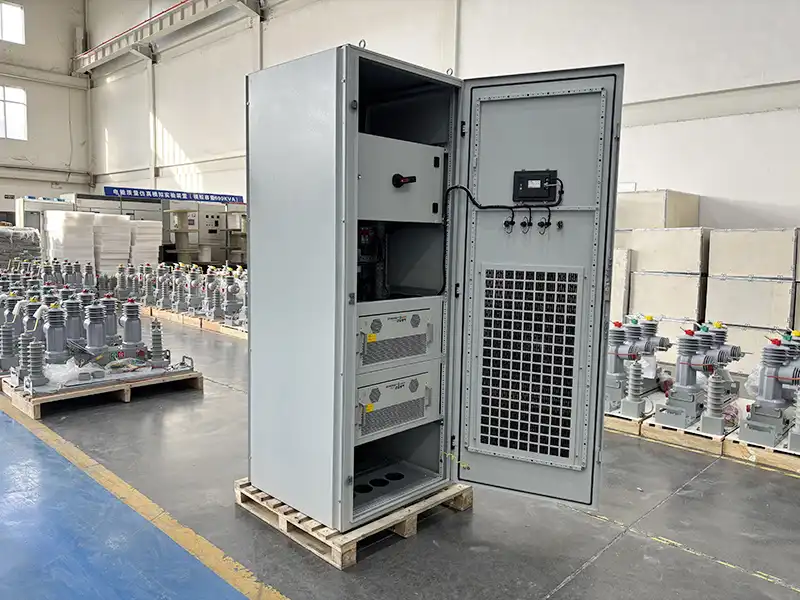
Reducing Harmonics in Factories: How Active Power Harmonic Filters Protect Industrial Equipment
Reducing Harmonics in Factories: How Active Power Harmonic Filters Protect Industrial Equipment
Modern manufacturing facilities rely on complex electrical systems powering automated production lines, precision machinery, and sophisticated control systems. However, these same advanced technologies create harmonic distortion that systematically damages equipment, increases energy costs, and compromises product quality. The hidden costs of poor power quality in industrial facilities often exceed hundreds of thousands of pounds annually through equipment failures, production disruptions, and energy waste.
Active power harmonic filters represent the most effective solution for protecting industrial equipment from harmonic-related damage while improving overall facility power quality. Unlike passive filtering approaches that address only specific frequencies, active harmonic filters provide dynamic, real-time protection against the full spectrum of harmonic distortion affecting modern manufacturing operations.
This comprehensive guide explores how harmonic distortion damages industrial equipment, the technology behind active harmonic filtering, and the substantial benefits manufacturers achieve through professional power quality solutions. For facility managers and engineers seeking to protect valuable equipment while optimising operational efficiency, understanding harmonic filtering represents a critical competitive advantage.
What Are Harmonics in Industrial Electrical Systems?
Understanding Harmonic Distortion in Manufacturing
Harmonics are electrical frequencies that occur at integer multiples of the fundamental 50Hz supply frequency in UK electrical systems. These unwanted frequencies create distorted sine waves that interfere with normal electrical equipment operation, causing efficiency losses, equipment stress, and system instability throughout manufacturing facilities.
The fundamental electrical supply provides pure sinusoidal waveforms at 50Hz, but non-linear loads including variable frequency drives, power electronics, and modern control systems draw current in non-sinusoidal patterns. This creates harmonic frequencies at 100Hz (2nd harmonic), 150Hz (3rd harmonic), 250Hz (5th harmonic), and higher multiples that contaminate the entire electrical system.
Manufacturing facilities experience particularly severe harmonic problems due to the concentration of electronic equipment, automated machinery, and power conversion devices. The cumulative effect of multiple harmonic sources creates system-wide power quality problems that affect equipment throughout the facility, from production machinery to administrative systems.
Types of Harmonics Commonly Found in Factories
Odd harmonics including 3rd, 5th, 7th, and 11th represent the most problematic frequencies in industrial electrical systems. These harmonics typically originate from six-pulse rectifiers common in variable frequency drives, welding equipment, and power supplies. Even harmonics are less common but can occur in systems with asymmetrical loading or equipment malfunctions.
Third harmonic distortion presents unique challenges in three-phase systems because these frequencies are in-phase across all three phases, causing them to add together in the neutral conductor. This can create neutral currents exceeding phase currents, leading to conductor overheating and potential fire hazards in manufacturing facilities.
Higher order harmonics above the 11th tend to be smaller in magnitude but can cause resonance conditions when they interact with system capacitance. These resonances can amplify specific harmonic frequencies to dangerous levels that damage equipment and create safety hazards throughout industrial facilities.
Measuring Harmonic Distortion in Industrial Facilities
Total Harmonic Distortion (THD) provides the standard measurement for quantifying power quality problems in manufacturing facilities. Current THD measures the distortion in load current, while voltage THD indicates how harmonics affect supply voltage quality. UK industrial facilities typically target THD levels below 5% to ensure reliable equipment operation.
Individual harmonic measurements identify specific problem frequencies and their sources, enabling targeted solutions for power quality improvement. Professional power quality analysis includes measurement of individual harmonic orders from the 2nd through 50th, providing comprehensive assessment of electrical system conditions.
Power quality monitoring equipment records harmonic levels over extended periods to identify patterns, peak distortion events, and correlations with production schedules. This data supports effective harmonic filtering system design while providing baseline measurements for verifying improvement results.
How Harmonics Damage Industrial Equipment and Machinery
Electrical Equipment Stress and Failure Mechanisms
Transformers suffer severe damage from harmonic distortion through increased core losses, conductor heating, and accelerated insulation degradation. Harmonic currents create additional losses beyond design parameters, causing transformers to overheat and fail prematurely. Manufacturing facilities often must derate transformers by 20-30% when harmonic distortion exceeds acceptable levels.
Motor efficiency losses result from harmonic frequencies creating rotating magnetic fields that oppose normal motor operation. These unwanted magnetic fields generate heat without contributing to mechanical output, reducing motor efficiency while accelerating bearing wear and insulation breakdown. Industrial motors operating in high-harmonic environments typically experience 30-50% reduced lifespan.
Capacitor banks used for power factor correction are extremely vulnerable to harmonic distortion because their impedance decreases with frequency. Harmonic currents can easily exceed capacitor current ratings, causing dielectric breakdown and catastrophic failure that creates safety hazards and expensive replacement costs.
Production Equipment Impact and Downtime
CNC machine tools require precise power quality for accurate positioning and surface finishing. Harmonic distortion creates control signal interference that affects machining accuracy, tool life, and product quality. Manufacturing facilities report increased scrap rates and rework requirements when harmonic levels exceed acceptable limits.
Automated production systems including robotics, conveyors, and process controls suffer from communication errors and unexpected shutdowns when harmonic distortion interferes with control signals. These disruptions create cascade effects throughout production lines, multiplying the impact of power quality problems on manufacturing output.
Process control systems rely on precise measurement and feedback signals that harmonic distortion corrupts. Temperature controllers, flow meters, and quality monitoring systems provide inaccurate readings when electrical noise from harmonics interferes with signal processing, compromising product quality and process efficiency.
Economic Impact of Harmonic-Related Failures
Unplanned maintenance costs escalate significantly in facilities with poor power quality as equipment failures occur more frequently and with less warning. Emergency repairs during production hours carry premium costs while production delays compound the financial impact of harmonic-related equipment problems.
Lost production time represents the largest economic impact from harmonic distortion, as equipment failures often cascade through interconnected manufacturing systems. A single motor failure in a critical process can shut down entire production lines for hours or days, creating revenue losses far exceeding equipment replacement costs.
Premature equipment replacement becomes necessary when harmonic distortion accelerates wear and causes repeated failures. Manufacturing facilities report motor replacement cycles 40-60% shorter than expected when harmonic distortion exceeds design limits, creating ongoing capital expenditure pressures that affect profitability and competitiveness.
Common Causes of Harmonics in Factories and Manufacturing Plants
Variable Speed Drives and Motor Controls
Variable frequency drives represent the largest source of harmonic distortion in modern manufacturing facilities. Standard six-pulse VFDs generate characteristic harmonic frequencies at the 5th, 7th, 11th, and 13th orders while drawing non-sinusoidal current from the electrical supply. The proliferation of VFDs for energy efficiency and process control has dramatically increased harmonic distortion levels.
VFD harmonic generation varies with loading conditions, with higher harmonic distortion typically occurring at partial loads common in variable-speed applications. Manufacturing processes requiring frequent speed changes or load variations create constantly changing harmonic patterns that challenge power quality management throughout the facility.
Multiple VFDs operating simultaneously create cumulative harmonic effects that can exceed the sum of individual contributions. Resonance conditions between VFD harmonic frequencies and system capacitance can amplify specific harmonics to dangerous levels requiring comprehensive harmonic filtering solutions.
Power Electronic Equipment Sources
Welding equipment and arc furnaces generate significant harmonic distortion through their non-linear arc characteristics. These loads create random harmonic patterns that vary with material properties, welding parameters, and operator technique. Manufacturing facilities with extensive welding operations often experience the most severe power quality challenges.
UPS systems and battery chargers contribute harmonic distortion through their rectifier and inverter circuits. While individual units may comply with harmonic standards, facilities with multiple UPS systems serving different production areas can create cumulative harmonic problems requiring active filtering solutions.
Electronic lighting systems including LED fixtures and electronic ballasts add to facility harmonic loads through their power supply circuits. While individual lighting fixtures generate small harmonic currents, large manufacturing facilities with hundreds of fixtures can experience significant cumulative harmonic distortion from lighting systems.
Non-Linear Load Accumulation Effects
Multiple small harmonic sources throughout manufacturing facilities combine to create system-wide power quality problems that exceed the impact of individual loads. Office equipment, control systems, and auxiliary devices all contribute to cumulative harmonic distortion that affects the entire electrical distribution system.
Resonance conditions develop when harmonic frequencies interact with system capacitance from power factor correction equipment, cables, and transformers. These resonances can amplify specific harmonic frequencies to levels far exceeding those generated by the original sources, creating dangerous conditions requiring immediate attention.
System impedance changes throughout the day as loads switch on and off, affecting harmonic propagation patterns and creating time-varying power quality conditions. Manufacturing facilities must consider these dynamic conditions when designing harmonic filtering systems to ensure effective protection under all operating scenarios.
What Is an Active Power Harmonic Filter?
Active Filter Technology Principles
Active harmonic filters use advanced power electronics to detect harmonic distortion in real-time and inject precisely controlled currents to cancel unwanted harmonics. This technology employs current transformers to monitor load currents, sophisticated control algorithms to analyze harmonic content, and PWM inverters to generate compensating currents that eliminate harmonic distortion.
Real-time harmonic detection enables active filters to respond immediately to changing load conditions and harmonic patterns. Unlike passive filters tuned to specific frequencies, active systems adapt continuously to provide optimal harmonic compensation regardless of load variations or system changes throughout manufacturing operations.
PWM inverter technology allows active filters to generate any required current waveform for harmonic compensation. Advanced control algorithms calculate the exact currents needed to cancel detected harmonics, then command the inverter to inject these compensating currents 180 degrees out of phase with the harmful harmonics.
Active vs Passive Harmonic Filtering Comparison
Active harmonic filters provide superior performance compared to passive LC filter circuits through their ability to adapt to changing harmonic conditions. Passive filters are tuned to specific frequencies and can become ineffective or even dangerous if system conditions change, while active filters automatically adjust to provide optimal performance under all conditions.
Frequency response advantages of active systems include compensation for multiple harmonic orders simultaneously and adaptation to load changes without retuning. Active filters typically address harmonics from the 2nd through 50th orders, providing comprehensive protection against the full spectrum of industrial harmonic sources.
Space requirements and installation flexibility favour active harmonic filters in modern manufacturing facilities where floor space is valuable. Active systems require significantly less space than equivalent passive filters while offering greater installation flexibility and easier integration with existing electrical systems.
Types of Active Harmonic Filter Configurations
Shunt active filters represent the most common configuration for industrial applications, connecting in parallel with harmonic-producing loads to inject compensating currents. These systems effectively reduce current harmonics while providing additional benefits including reactive power compensation and load balancing capabilities.
Series active filters connect in series with sensitive loads to provide voltage harmonic protection and isolation from upstream power quality problems. While less common in industrial applications, series filters offer superior protection for critical loads requiring the highest power quality levels.
Hybrid systems combining active and passive filtering elements optimise performance while controlling costs for large industrial installations. These systems use passive filters to handle the largest harmonic currents while active filters provide precise compensation for variable harmonics and system adaptation capabilities.
Learn more about our comprehensive active power harmonic filter solutions designed for industrial applications.
How Active Harmonic Filters Reduce Harmonic Distortion
Real-Time Harmonic Detection and Analysis
Current transformer monitoring provides continuous measurement of load currents with high accuracy and fast response times required for effective harmonic compensation. Advanced active filters use multiple current transformers to monitor three-phase currents and neutral current, providing comprehensive harmonic analysis for optimal system performance.
Fast Fourier Transform analysis enables active filters to identify individual harmonic components within milliseconds of detection. Modern control systems process harmonic data in real-time to calculate precise compensation currents required for effective harmonic cancellation across all problematic frequencies.
Selective harmonic compensation strategies allow active filters to target specific harmonic orders while ignoring others, optimising system performance for particular applications. Manufacturing facilities can configure filters to prioritise compensation for the most problematic harmonics while maintaining system stability and efficiency.
Dynamic Current Injection Technology
Active filters generate compensating currents 180 degrees out of phase with detected harmonics, effectively cancelling unwanted frequencies through destructive interference. This current injection occurs continuously in real-time, providing immediate harmonic compensation regardless of load changes or system variations.
Response time specifications for industrial active filters typically require compensation within one cycle of the fundamental frequency to ensure effective harmonic cancellation. Advanced control systems achieve response times of 1-2 milliseconds, providing virtually instantaneous harmonic compensation for rapidly changing industrial loads.
Load balancing capabilities in three-phase active filters address unbalanced loading conditions common in manufacturing facilities while simultaneously providing harmonic compensation. These systems can balance phase currents and eliminate neutral currents caused by unbalanced loads and third harmonic distortion.
Adaptive Filtering Performance
Automatic adaptation to load changes ensures active filters maintain optimal performance as manufacturing processes vary throughout production cycles. The control system continuously monitors harmonic levels and adjusts compensation currents to maintain target THD levels regardless of production scheduling or equipment operation changes.
Multiple harmonic order compensation from the 2nd through 50th harmonics provides comprehensive protection against all significant harmonic sources in industrial facilities. This broad frequency coverage ensures effective protection for diverse equipment types while accommodating future changes in facility electrical loads.
THD reduction performance typically achieves improvement from 30%+ to less than 5% in properly designed systems, meeting stringent power quality standards while protecting sensitive equipment. These improvements translate directly to reduced equipment stress, extended lifespan, and improved operational reliability throughout manufacturing facilities.
Protecting Industrial Equipment with Active Harmonic Filters
Motor and Drive System Protection
Extended motor bearing life results from reduced electrical stress and heat generation when harmonic distortion is eliminated. Motors operating with clean power typically achieve 25-40% longer bearing life while requiring less frequent maintenance and experiencing fewer unexpected failures during critical production periods.
Improved VFD performance occurs when input power quality meets manufacturer specifications, allowing drives to operate at full capacity without derating. Clean power supply enables VFDs to achieve better speed regulation, reduced torque ripple, and improved energy efficiency throughout their operating range.
Reduced motor heating decreases energy consumption while extending insulation life and improving overall motor efficiency. Manufacturing facilities report 3-8% energy savings in motor-driven systems when harmonic distortion is properly controlled through active filtering technology.
Transformer and Distribution Equipment Safety
Elimination of transformer overheating prevents premature failure and eliminates the need for derating due to harmonic distortion. Transformers operating with clean power can carry full rated load while achieving design efficiency levels, maximising facility power capacity utilisation.
Protection of power factor correction capacitors prevents catastrophic failures that create safety hazards and expensive replacement costs. Active harmonic filters eliminate the harmonic currents that damage capacitor banks while providing alternative reactive power compensation when needed.
Reduced neutral conductor current eliminates overheating problems in three-phase distribution systems where third harmonic currents can exceed phase currents. Proper harmonic filtering eliminates these dangerous conditions while improving overall electrical system safety and reliability.
Sensitive Electronic Equipment Safeguarding
PLC and control system protection from harmonic interference ensures reliable operation of automated manufacturing systems. Clean power supply eliminates communication errors, unexpected resets, and signal corruption that can disrupt production processes and compromise safety systems.
Improved accuracy of measurement and testing equipment results from stable power quality that eliminates noise and interference in precision instruments. Quality control systems, calibration equipment, and process monitoring devices all benefit from the stable electrical environment that harmonic filtering provides.
Enhanced reliability of communication systems including industrial networks, data collection systems, and remote monitoring equipment improves overall facility connectivity and information systems performance. Proper power quality supports Industry 4.0 initiatives requiring reliable data communication throughout manufacturing facilities.
Improving Power Quality and System Reliability in Factories
Voltage Stability and Waveform Quality
THD reduction improves voltage quality throughout the electrical distribution system, providing stable power supply for all connected equipment. Voltage waveform improvement eliminates notching and distortion that can affect sensitive electronic equipment and precision manufacturing processes.
Elimination of voltage distortion ensures that equipment receives clean, stable power that meets manufacturer specifications for optimal performance. This improvement translates to better process control, reduced product defects, and improved manufacturing quality throughout the facility.
Enhanced power factor results from reactive power compensation capabilities built into many active harmonic filters. Improved power factor reduces demand charges while increasing electrical system capacity for future expansion or additional equipment installation.
System Reliability and Uptime Improvements
Reduced equipment failures result from eliminating the electrical stress and overheating caused by harmonic distortion. Manufacturing facilities typically report 30-50% reduction in unexpected equipment failures after installing comprehensive harmonic filtering systems.
Improved process control accuracy occurs when control systems receive clean power free from harmonic interference. Better control performance translates to improved product quality, reduced waste, and increased production efficiency throughout manufacturing operations.
Enhanced production quality results from stable electrical conditions that eliminate process variations caused by power quality problems. Consistent power supply enables precision manufacturing processes to achieve design specifications while reducing scrap rates and rework requirements.
Grid Interface and Utility Relationship Benefits
Compliance with utility power quality requirements prevents penalty charges and maintains good relationships with electrical suppliers. Active harmonic filters ensure facility harmonic emissions remain within acceptable limits at the point of common coupling.
Reduced penalty charges for poor power factor and harmonic distortion improve facility operating costs while demonstrating environmental responsibility. Utilities increasingly monitor and penalise facilities that contribute to grid power quality problems.
Improved relationship with electrical suppliers results from demonstrating commitment to power quality and grid stability. Facilities with good power quality records often receive priority service and better rates from utility companies.
Reducing Energy Losses and Maintenance Costs with Harmonic Filtering
Energy Efficiency Improvements Through Harmonic Reduction
Reduced electrical losses in transformers and distribution cables occur when harmonic distortion is eliminated. These losses, which convert electrical energy to waste heat, can represent 5-15% of facility electrical consumption when harmonic distortion is severe.
Improved motor efficiency results from eliminating harmonic frequencies that create opposing magnetic fields without contributing to useful mechanical output. Manufacturing facilities typically achieve 3-8% improvement in motor system efficiency after installing comprehensive harmonic filtering.
Lower cooling requirements result from reduced equipment heating when harmonic distortion is controlled. Facilities often experience reduced HVAC loads and improved comfort conditions when electrical equipment operates cooler due to clean power supply.
Preventive Maintenance Cost Reduction
Extended equipment life reduces replacement schedules and capital expenditure requirements throughout manufacturing facilities. Electrical equipment operating with clean power typically achieves 20-40% longer service life compared to equipment subjected to harmonic distortion.
Fewer emergency repairs occur when equipment operates under stable electrical conditions without the stress and overheating caused by harmonic distortion. Manufacturing facilities report 40-60% reduction in unplanned maintenance calls after implementing comprehensive power quality solutions.
Reduced spare parts inventory requirements result from improved equipment reliability and predictable maintenance schedules. Facilities can optimise inventory levels while improving equipment availability through reduced failure rates and longer service intervals.
Insurance and Risk Management Benefits
Reduced fire risk from electrical equipment overheating improves facility safety while potentially reducing insurance premiums. Harmonic distortion creates heat that can cause electrical fires, particularly in overloaded neutral conductors and capacitor banks.
Lower equipment failure rates affect insurance premiums and business interruption coverage costs. Facilities demonstrating commitment to power quality and equipment protection often receive better insurance rates and terms.
Improved workplace safety through stable electrical systems reduces accident risks and liability exposure. Clean, stable power supply eliminates electrical hazards while ensuring safety systems operate reliably during emergency conditions.
Compliance with Power Quality Standards Using Active Harmonic Filters
UK and European Power Quality Regulations
IEC 61000 series standards establish harmonic limits for industrial equipment and facilities, requiring THD levels below 5% for most applications. Active harmonic filters provide reliable compliance with these international standards while accommodating future regulatory changes.
G5/4 and G59 connection requirements for industrial facilities include specific harmonic distortion limits at the point of common coupling. Active filtering ensures compliance with these utility interconnection standards while maintaining flexibility for facility expansion and equipment changes.
BS EN 50160 power quality standards specify acceptable limits for voltage distortion and harmonic content in electrical distribution systems. Professional harmonic filtering solutions ensure long-term compliance while protecting facility equipment from power quality problems.
Industry-Specific Standards and Requirements
Manufacturing sector power quality specifications often exceed general standards due to precision equipment requirements and process sensitivity. Active harmonic filters provide the superior performance needed for demanding industrial applications.
Automotive industry harmonic distortion limits reflect the critical nature of precision manufacturing processes and automated production systems. Facilities supplying automotive manufacturers must demonstrate consistent power quality compliance.
Pharmaceutical and food processing requirements include strict power quality standards to ensure product safety and process validation. Clean power supply supports critical manufacturing processes while meeting regulatory compliance obligations.
Utility Connection Agreements and Compliance
Point of common coupling harmonic limits ensure facility harmonic emissions don’t affect other utility customers or grid stability. Active harmonic filters provide reliable compliance with these limits while adapting to changing facility loads and conditions.
Compliance monitoring and reporting requirements are simplified when active filtering systems provide continuous power quality measurement and documentation. These systems generate reports supporting regulatory compliance and utility coordination.
Penalty avoidance through proactive harmonic management protects facilities from utility charges and disconnection threats. Active filtering systems prevent power quality problems before they affect utility systems or other customers.
Explore our industrial automation projects showcasing comprehensive power quality solutions.
Why Active Harmonic Filters Are Essential for Modern Industrial Facilities
Increasing Electronic Load Density
Growing use of variable speed drives and automation systems continuously increases harmonic distortion levels in manufacturing facilities. Modern production equipment relies heavily on power electronics that generate harmonics, making active filtering essential for maintaining power quality.
LED lighting adoption creates new harmonic sources throughout manufacturing facilities as traditional lighting is replaced with electronic systems. While individual LED fixtures generate small harmonic currents, large facilities can experience significant cumulative harmonic distortion requiring active filtering solutions.
Digital control systems requiring clean power supply for reliable operation are increasingly common in modern manufacturing. These systems are particularly sensitive to harmonic interference, making power quality management critical for operational success.
Industry 4.0 and Smart Manufacturing Requirements
IoT devices and sensors requiring stable power quality for accurate data collection are proliferating throughout manufacturing facilities. These devices form the foundation of smart manufacturing systems that depend on reliable power quality for successful implementation.
Advanced manufacturing processes demanding precision and repeatability require stable electrical conditions that harmonic distortion compromises. Active filtering ensures the power quality needed for precision manufacturing and automated quality control systems.
Integration with renewable energy and microgrids requires sophisticated power quality management to ensure stable operation and grid synchronisation. Active harmonic filters provide the power quality control needed for successful renewable energy integration.
Economic Justification and Return on Investment
Typical payback periods of 12-24 months make active harmonic filtering an attractive investment for most manufacturing facilities. The combination of energy savings, reduced maintenance costs, and avoided downtime creates compelling financial justification for power quality improvement.
Cost-benefit analysis including avoided downtime often shows return on investment within the first year for facilities experiencing frequent harmonic-related problems. Production continuity benefits alone can justify active filtering investment in critical manufacturing operations.
Long-term value creation through equipment protection and improved reliability provides ongoing benefits throughout the filter system’s 15-20 year lifespan. These extended benefits multiply the initial investment return while supporting facility competitiveness and profitability.
Case Study: Real-World Harmonic Filter Implementation
Manufacturing Facility Challenge and Solution
A major glass manufacturing facility experienced severe harmonic distortion problems from multiple large VFDs controlling production machinery. THD levels reached 35% causing transformer overheating, motor failures, and production interruptions that affected delivery schedules and customer satisfaction.
Active harmonic filter selection involved detailed power quality analysis to identify harmonic sources and determine optimal filtering configuration. The solution included multiple active filters strategically located throughout the facility to address localised harmonic problems while providing comprehensive facility protection.
Installation approach required careful coordination with production schedules to minimise operational disruption. System integration included connection to existing building management systems for monitoring and coordination with other power quality equipment throughout the facility.
Measured Results and Performance Verification
Before and after harmonic distortion measurements demonstrated THD reduction from 35% to 4.2%, well within acceptable limits for industrial facilities. Individual harmonic measurements showed effective cancellation of problematic frequencies while maintaining stable system operation.
Equipment performance improvements included 40% reduction in motor bearing failures, elimination of transformer overheating problems, and improved production line reliability. Production quality improvements resulted from more stable electrical conditions supporting precision manufacturing processes.
Energy efficiency improvements totalled 6% reduction in facility electrical consumption through reduced electrical losses and improved motor efficiency. These energy savings alone justified a significant portion of the harmonic filtering system investment.
Lessons Learned and Best Practices
Implementation challenges included coordinating installation with production schedules and ensuring proper integration with existing electrical protection systems. Professional installation and commissioning proved critical for achieving optimal system performance and reliability.
Maintenance requirements include routine inspection of cooling systems, verification of current transformer connections, and periodic performance validation through power quality measurements. Preventive maintenance schedules ensure long-term system reliability and performance.
Recommendations for similar applications emphasise the importance of comprehensive power quality analysis before system selection and the value of professional installation and commissioning. Proper system design and installation are critical for achieving optimal harmonic filtering performance.
Review our detailed Kite Glass Case Study for comprehensive implementation details and measured results.
Conclusion
Industrial harmonic distortion represents one of the most significant yet often overlooked threats to modern manufacturing operations. The proliferation of electronic equipment and automation systems has created power quality challenges that systematically damage equipment, increase energy costs, and compromise production reliability throughout industrial facilities.
Active power harmonic filters provide comprehensive solutions to these challenges through real-time harmonic detection and compensation technology that adapts to changing operating conditions. Professional harmonic filtering systems deliver immediate power quality improvements while protecting valuable equipment investments and ensuring long-term operational reliability.
The economic benefits of harmonic filtering extend far beyond energy savings to include reduced maintenance costs, extended equipment life, improved production quality, and enhanced facility safety. With typical payback periods of 12-24 months and ongoing benefits throughout 15-20 year system lifespans, active harmonic filters represent essential investments for competitive manufacturing operations.
For industrial facilities seeking to optimise factory power quality while protecting critical equipment investments, professional harmonic filtering assessment provides the foundation for effective power quality management. Early intervention prevents costly equipment damage while ensuring manufacturing operations achieve design performance and reliability targets.
Transform your facility’s power quality and protect valuable equipment through proven active harmonic filtering technology. Our certified engineers specialise in industrial power quality solutions, providing comprehensive assessment and implementation services that deliver guaranteed results while maintaining operational continuity.
Contact our industrial power quality specialists today to schedule your comprehensive facility assessment and discover how active harmonic filtering can improve your manufacturing operations’ reliability, efficiency, and profitability.