
Industrial Solar Panels for Manufacturers and Industrial Sites
Industrial solar panels give manufacturers and industrial operators a direct route to lower electricity costs and reduced Scope 2 carbon emissions. With large roof areas, high daytime energy loads and significant kilowatt-hour costs, manufacturing and industrial sites are among the strongest candidates for commercial solar in the UK.
We assess the site and give you a clear picture of system size, savings and payback before you make any decision. No obligation.
Why Manufacturing and Industrial Sites Suit Solar
The economics of solar work best when the site can consume the majority of what the array generates. Manufacturing sites typically have exactly this profile: large, consistent daytime electricity loads from motors, compressors, process equipment and HVAC, running across the same hours that a solar array generates most effectively.
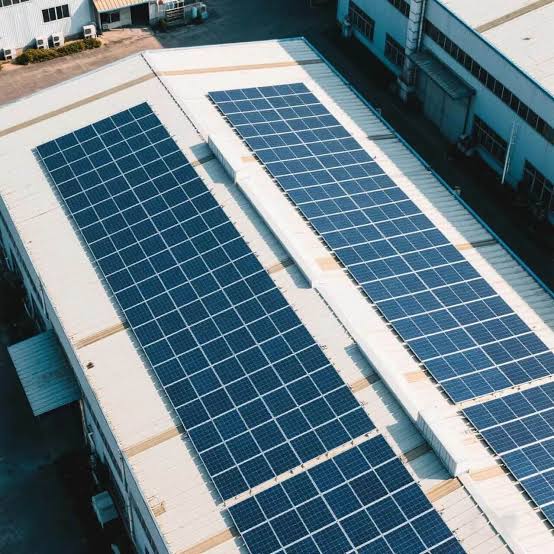
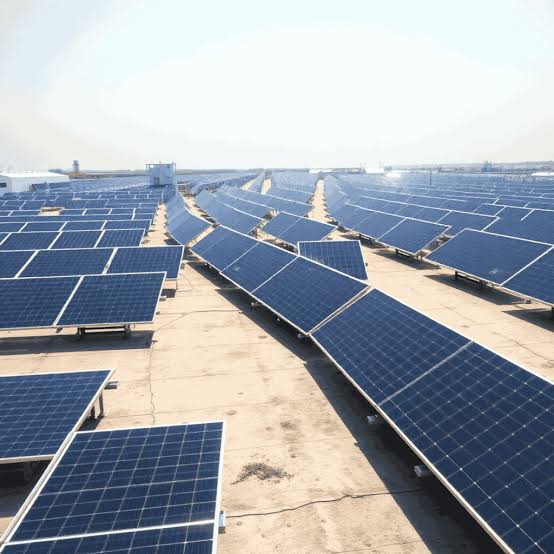
Large roof areas mean large systems are viable without the footprint constraints that limit solar on smaller commercial buildings. Warehouse and factory roofs of 2,000 square metres or more can accommodate arrays in the hundreds of kilowatts peak, at a scale where the unit economics are stronger and the savings are material at board level.
For manufacturing businesses facing rising electricity costs and supply-chain or customer pressure on carbon reporting, solar addresses both the financial and the ESG dimension in a single installation.
What Industrial Solar to Solar Delivers
Direct reduction in electricity costs. Solar-generated electricity displaces grid imports at the prevailing tariff rate. On large industrial sites, this represents a significant annual saving from day one of commissioning.
Predictable energy cost over the system’s life. Solar generation costs are fixed at installation. As grid tariffs rise, the value of self-generated electricity increases and the saving grows over time.
Scope 2 carbon reduction. Self-generated renewable electricity directly reduces the Scope 2 emissions a business reports, providing a measurable, verifiable outcome for ESG and supply-chain reporting.
Peak demand management with battery storage. Adding battery storage allows demand peaks to be managed, reducing maximum demand charges and the capacity component of the electricity bill. See the commercial solar battery storage page for detail.
No upfront capital required if preferred. A funded PPA route is available for sites that prefer not to commit capital. See the solar PPA page.
System Design for Industrial Sites
Scale and array sizing
Industrial solar systems are typically sized to match or broadly cover the site’s daytime base load. A system sized significantly above base load will generate surplus exported at a low Smart Export Guarantee rate. A system sized below it leaves more of the load on grid import than necessary.
Half-hourly consumption data from the site’s meter is the starting point for sizing. This shows the daytime load profile, the minimum base load the array needs to cover to maximise self-consumption, and the periods where battery storage would capture surplus that cannot be consumed immediately.
Roof suitability and structural surveys
Industrial and warehouse roofs vary considerably in suitability for solar. Pitch, orientation, condition, load-bearing capacity, and the presence of rooflights or plant all affect what can be installed and where. Powerdown220 conducts a structural survey as part of the site assessment.
Older roofs with asbestos cement sheets are common on industrial estates built before the 1980s. Asbestos roofing does not prevent solar installation, but it requires specialist handling and affects the installation method. Fragile or low-load roofs may require reinforcement before panels can be installed, or may point towards a ground-mount or carport solution instead.
Ground-mount and carport options
Where roof space is limited, unsuitable, or already occupied by plant and equipment, ground-mounted arrays on unused land or car parks are a practical alternative. Solar carports provide covered parking alongside electricity generation and are increasingly common on large industrial and logistics sites.
Grid Connection: DNO and G99
Three-phase supply and export capacity
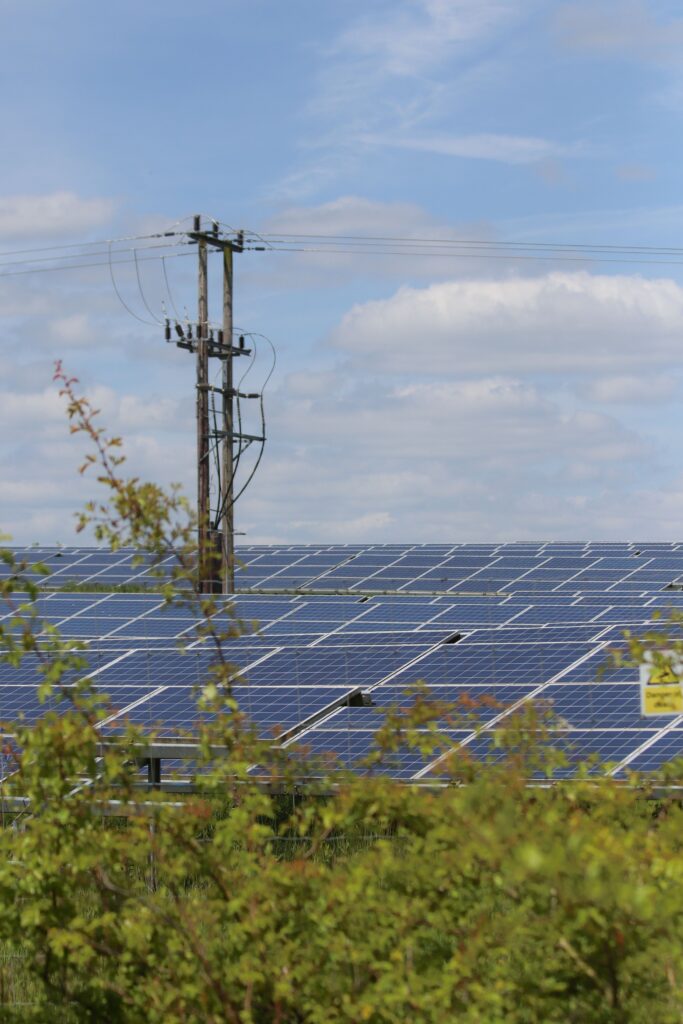
Industrial sites are connected on a three-phase supply, and solar systems at industrial scale are designed accordingly. The key grid constraint for larger systems is the export limit: the maximum power the site is permitted to export to the distribution network.
For systems above a certain size, a G99 application is required to the Distribution Network Operator. The DNO assesses the impact on the local network and sets the permitted export limit, which may be below the system’s maximum generation capacity.
Export limiting and active management
Where the DNO imposes an export limit, the solar system can be configured with active export limiting, which curtails generation when the site is not consuming enough to stay within the permitted threshold. Battery storage is the better alternative: surplus generation charges the battery rather than being curtailed or exported, capturing more of the generated energy on-site and removing the export limit as a constraint.
Grid application timelines
G99 applications can take several months to process and should be factored into project planning from the outset. Powerdown220 manages the application process as part of the project, not as an afterthought.
Installing Around Production: Uptime and Safety
Industrial solar installations require more planning than standard commercial rooftop projects. Roof access, structural work, and grid connection all need to be sequenced around the site’s production schedule and health and safety requirements.
Powerdown220 plans installations around the site’s operating pattern. Roof work is carried out without requiring shutdown of production lines in most cases. The grid connection and switchgear work that brings the system live is scheduled for a planned maintenance window or weekend.
Health and safety management on industrial sites requires formal documentation: method statements, risk assessments, and coordination with the site’s own H&S team. Powerdown220 provides full documentation as part of the project management process.
ESG, Scope 2 and Supply-Chain Carbon Reporting
Scope 2 emissions cover the greenhouse gas emissions associated with purchased electricity. For manufacturers, this is typically a significant portion of total reported emissions. Solar generation consumed on-site directly displaces Scope 2 emissions: electricity generated and used on-site is zero-carbon at the point of use.
For businesses reporting under the GHG Protocol, CDP, or supply-chain sustainability frameworks, on-site renewable generation produces a verifiable, location-specific reduction in Scope 2 emissions. This is more straightforward to report and defend than market-based instruments such as renewable energy certificates.
Customer and supply-chain carbon requirements are increasingly common in automotive, food and drink, packaging, and other manufacturing sectors. Solar generation at the scale available to industrial sites is one of the most direct responses available, and the output is measurable and auditable from day one.

Find out what your industrial site could generate and save
We assess roof area, structural condition, grid connection and load profile, and give you a clear system design, savings projection and payback calculation before you make any decision.
Project Management Built for Industrial Environments
Industrial solar projects involve more moving parts than standard commercial rooftop installations. Structural surveys, DNO applications, production scheduling, health and safety coordination, and commissioning testing all need to be sequenced correctly to keep the project on programme.
Powerdown220 manages the full project from survey to commissioning. The site team is consulted before any work requiring access to operational areas, and the programme is built around production requirements rather than installer convenience.
Post-commissioning, remote monitoring tracks generation and self-consumption against the projected saving.
Related Solutions
Commercial Solar Battery Storage
Add battery storage to maximise self-consumption and reduce peak demand charges on your industrial site. Sized around your load profile and production pattern.
Solar and battery storage for business
Solar PPA: Zero Capex Solar
Install industrial solar with no upfront capital. Powerdown220 funds, owns and maintains the system. You pay a below-tariff rate for the electricity it generates.
Voltage Optimisation
Reduce what your factory draws from the grid by correcting over-voltage waste. Often assessed alongside solar as part of a whole-site energy review for a stronger combined saving.
Power Factor Correction
Remove reactive power charges from your electricity bill. Frequently considered alongside solar as part of a full supply-side efficiency assessment
Get a Clear Pictuure of What Industrial Solar
Would Deliver
A free site survey from Powerdown220 covers roof suitability, structural assessment, grid connection, system sizing and savings projection. You get a complete picture before making any decision.

Frequently Asked
Questions
Are industrial solar panels different from commercial solar panels?
The panels themselves are the same technology. What differs is the system scale, grid connection requirements, structural and planning considerations, and installation complexity. Industrial systems on factories and warehouses are typically larger, involve G99 DNO applications for export, and require more detailed structural assessment of large industrial roofs.
How much roof area does an industrial solar system need?
As a general guide, 1 kWp of solar requires approximately 5 to 7 square metres of unshaded roof space. A 500 kWp system requires around 2,500 to 3,500 square metres of usable roof. Most large warehouse and factory roofs exceed this, which is why industrial sites are well suited to solar at scale.
Can solar panels be installed on an asbestos cement roof?
Yes, in most cases. Asbestos cement roofing does not prevent solar installation, but it requires a specialist approach to avoid disturbing the material. Installation methods that do not penetrate the roofing sheets are typically used.
What is a G99 application and how long does it take?
G99 is the engineering recommendation governing the connection of generation equipment above a certain size to the UK distribution network. A G99 application is submitted to the local DNO, who assesses the network impact and sets connection terms, including any export limit.
How does industrial solar reduce Scope 2 carbon emissions?
Scope 2 emissions cover the greenhouse gases associated with purchased electricity. Solar generation consumed on-site displaces grid electricity, reducing the volume of purchased electricity and the associated Scope 2 emissions. The reduction is verifiable, location-specific, and reportable under both GHG Protocol market-based and location-based methods.
What funding options are available for industrial solar?
Industrial solar can be purchased outright, which produces the highest total return and may qualify for capital allowances. It can also be funded through a solar PPA with no upfront cost, or as part of a fully funded combined project pairing solar with voltage optimisation.
How long does an industrial solar installation take?
Programme length depends on system size, roof condition, DNO application timelines, and site access constraints. Powerdown220 provides a project programme at the outset and manages each stage through to commissioning.
Can solar work alongside existing energy efficiency measures?
Yes. Solar works alongside voltage optimisation, power factor correction and battery storage as part of a whole-site energy strategy. In many cases, reducing what the site draws from the grid through voltage optimisation and power factor correction before sizing a solar array produces a better-sized system and a stronger combined payback.