Are Commercial Solar Panels Worth It? An Honest Assessment for UK Businesses
The question of whether commercial solar panels are worth it comes up early in most evaluation processes, and the honest answer is that it depends on the site. For some commercial and industrial premises the financial case is compelling. For others, the numbers are marginal or the site is unsuitable. This post sets out what actually determines whether solar makes sense for a commercial site, what the risks are, and how to work through the decision.
This is written for businesses carrying out a serious evaluation, not for homeowners. The scale, funding options, grid connection requirements, and financial drivers at commercial level are materially different from domestic solar.
What Makes Commercial Solar Panels Worth It?
The financial case for commercial solar rests on a straightforward mechanism: the site installs a solar array, generates electricity from it, and uses that electricity instead of buying it from the grid. Every unit of solar generation consumed on site displaces a grid import at the site’s tariff rate. Surplus generation is exported to the grid under the Smart Export Guarantee at a much lower rate.
This means the return is not simply about how much electricity the panels generate. It is about how much of that generation the site actually uses directly, and at what tariff rate. A site that consumes most of what it generates during the day, at a high unit rate, will see a much stronger financial case than a site that exports most of its generation at a low SEG rate.
When Is the Financial Case Strongest?
High electricity unit rates
The value of self-consumed solar generation rises directly with the site’s import tariff. UK commercial and industrial electricity tariffs vary considerably, and businesses that have seen their unit rates increase significantly over recent years will see a stronger solar payback than those on historically lower rates. The higher the rate, the faster the payback.
High daytime consumption
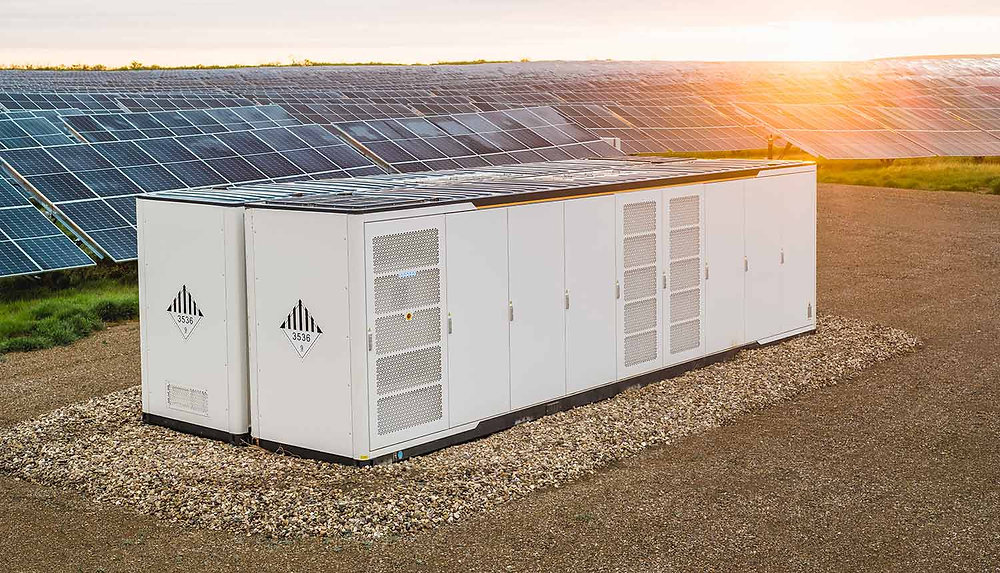
Solar generation is highest in the middle of the day. A site with substantial electricity consumption throughout the day, for example a food production facility, a cold store, or a manufacturing operation running day shifts, is better placed to consume a high proportion of its solar generation directly. A site that only draws significant load in the evenings or overnight will need battery storage to benefit fully from solar generation.
Large, unobstructed roof area
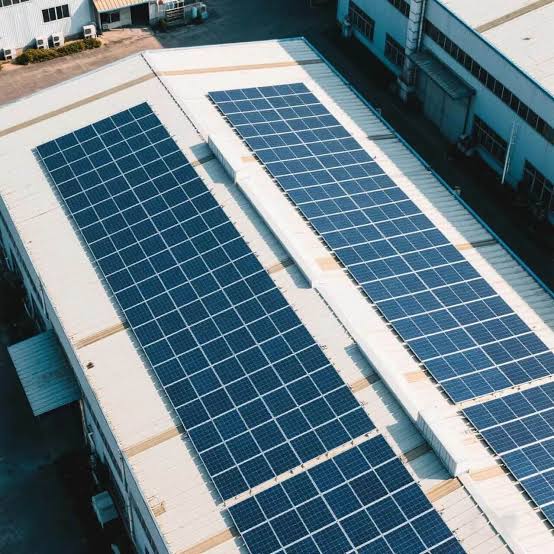
Commercial and industrial buildings typically have far more usable roof area per site than residential properties, which is one reason the economics of commercial solar are often stronger. A flat commercial roof with good structural capacity, no significant shading, and appropriate orientation can accommodate a larger array relative to the building’s consumption than most domestic properties.
Sites with high and relatively predictable load
Solar works best where consumption is relatively predictable. Sites with highly variable or unpredictable demand are harder to optimise through solar alone, though battery storage can help smooth the profile. Distribution warehouses, hotels, retail units with consistent trading hours, and offices with stable occupancy all tend to have the kind of predictable load that supports a straightforward solar business case.
When Might Solar Be Less Compelling?
Not every commercial site sees a strong financial case. Understanding the limitations is as important as understanding the opportunities.
Low daytime consumption without storage
If a site draws most of its load in the evenings or overnight, and does not have battery storage, most of the solar generation will be exported at the SEG rate rather than consumed on site. Without storage, the economics of solar for sites with low daytime demand can be marginal. Battery storage can address this, but at additional capital cost.
Roof condition or structural constraints
A roof that needs significant remedial work before it can carry panels, or a building with structural limitations that restrict the panel loading, will add to the project cost and reduce the overall return. A structural survey is standard before any commercial installation, and if significant work is required it affects the payback calculation.
Short-term occupancy or lease uncertainty
A solar installation is a long-term investment. For businesses in leased premises with a short remaining lease term or uncertainty about tenure, the business case requires careful assessment. A solar PPA removes the ownership concern, since the installer owns the system, but the site still needs to be occupied for long enough for the PPA to make sense.
Low electricity spend
For sites with very low electricity consumption, the absolute saving from solar may be small even if the proportional saving is meaningful. The business case for solar strengthens considerably as electricity spend increases. Sites spending below a certain threshold annually may find the investment harder to justify on financial grounds alone.
What Does the Payback Actually Look Like?
For commercial solar in the UK, payback is typically measured in years rather than decades for well-specified installations on sites with a good consumption profile. The specific figure depends on system size, installation cost, the site’s tariff, and the proportion of generation consumed on site.
A site that can consume 70 to 80 per cent or more of its solar generation directly, with a reasonable tariff rate, will generally see a stronger payback than one where self-consumption is lower. Battery storage improves self-consumption at additional capital cost, and may or may not improve the overall payback depending on the site’s demand profile and tariff structure.
The SEG export rate provides some return on generation that is not consumed on site, but it is generally a much weaker revenue stream than self-consumption savings. Financial projections that assume a high proportion of export income tend to produce optimistic payback numbers that do not reflect reality once the system is running.
What Are the Main Risks?
Generation below projections
Solar generation projections are based on historical irradiance data and the specific characteristics of the site. Actual generation can differ from projections due to shading that was not fully accounted for, soiling of panels, or performance degradation over time. A well-specified system with proper monitoring will deliver results close to projections, but it is worth understanding the assumptions behind any projection provided.
Tariff changes over the system life
A commercial solar installation will operate for twenty years or more. The tariff environment over that period will change. A business case built on current tariff rates makes a reasonable assumption about near-term savings but should be understood as a projection rather than a guarantee. If tariff rates fall significantly, payback extends. If they remain elevated or increase, payback shortens.
Grid export constraints
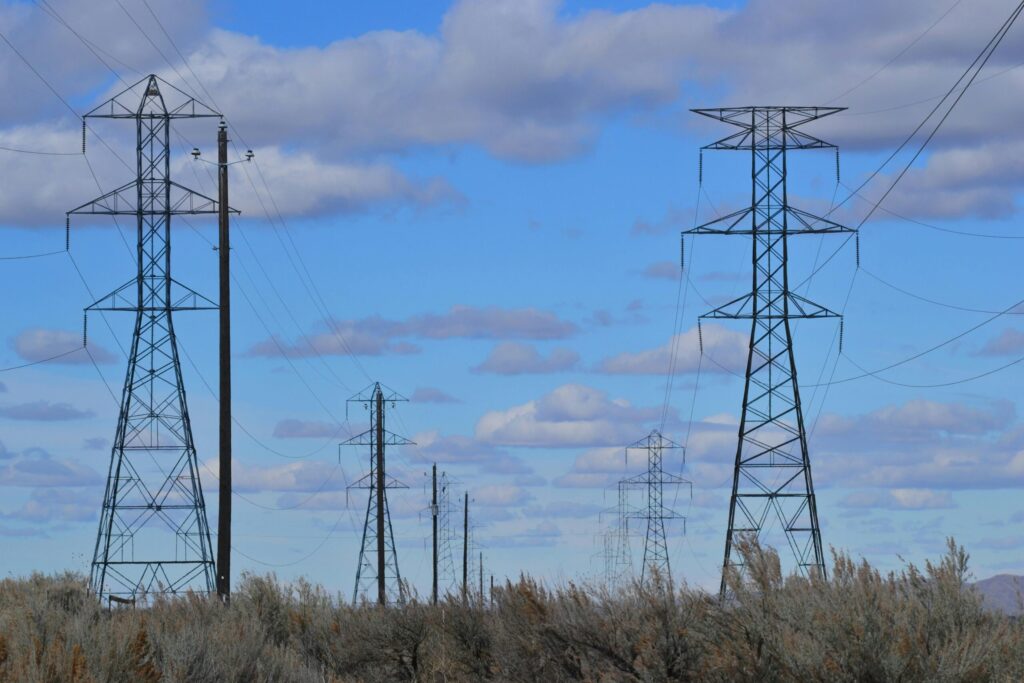
The DNO may impose an export limit as a condition of the grid connection approval, particularly for larger systems. An export limit restricts how much surplus generation can be fed back to the grid, which reduces the SEG income element of the business case. Understanding whether export constraints apply to a particular site is part of the pre-installation assessment.
Change in site use
If the business’s operations change and the site’s consumption profile shifts materially, the original business case assumptions may no longer hold. This is particularly relevant for businesses in sectors where production volumes or operating hours may change. Battery storage with a flexible management system can adapt to some changes in load profile, but it cannot fully compensate for a large reduction in site consumption.
Capital Purchase, PPA, or Funded Arrangement?
For businesses where the financial case stacks up, the next question is how to fund it. Capital purchase delivers the strongest total return over the system’s life but requires upfront investment. A solar PPA removes the upfront cost entirely: the installer owns the system and the business pays a below-tariff rate for the electricity it generates. Total lifetime return is lower than outright purchase, but the savings begin from day one with no capital committed.
A fully funded arrangement pairing solar with voltage optimisation is also available for qualifying sites. Voltage optimisation reduces energy consumption by correcting the over-voltage that affects most UK commercial sites, and the two technologies work together effectively under a single funded project structure.
How to Decide Whether Solar Is Worth It for Your Site
The only way to answer this reliably is a site-specific assessment. The assessment needs to include the available roof area and its structural condition, the site’s half-hourly consumption data, the tariff structure, the grid connection capacity and any DNO constraints, and a load profile analysis to determine how much of the solar generation the site would consume directly.
From that data, a system can be properly sized and a realistic cost, savings, and payback projection produced. The projection should be based on actual consumption data, not assumed figures, and should show the sensitivity of the payback to key assumptions such as self-consumption rate and tariff levels.
Powerdown220 offers a free site survey for UK commercial and industrial sites that covers all of this. Use the free savings calculator for an initial estimate based on your energy spend and sector, then contact our team to arrange a full site assessment.
Frequently Asked Questions
Are commercial solar panels worth it in the UK?
For many UK commercial and industrial sites, yes, though the strength of the financial case depends on the site’s electricity tariff, daytime consumption profile, roof condition, and the proportion of solar generation that can be consumed directly. A site-specific assessment is necessary to produce a reliable answer for a particular business.
What is the payback period on commercial solar in the UK?
Commercial solar payback varies by site but is typically measured in years rather than decades for well-specified installations with a good self-consumption profile. Sites with high electricity spend and substantial daytime consumption tend to see the strongest returns.
How much can a business save with commercial solar panels?
Savings depend on system size, the site’s import tariff, and how much of the solar generation is consumed on site rather than exported. A site-specific assessment, based on actual half-hourly consumption data, is the only reliable way to estimate savings for a particular business.
What is the Smart Export Guarantee and how much does it pay?
The Smart Export Guarantee (SEG) requires licensed electricity suppliers to offer a payment for surplus solar generation exported to the grid. SEG rates are set by each supplier and are generally significantly below the import tariff. The financial case for commercial solar is strongest where the site can consume most of its generation directly, rather than relying on export income.
Can I get commercial solar with no upfront cost?
Yes. A solar PPA allows a commercial solar installation with no capital outlay. The installer owns and maintains the system, and the business pays a below-tariff rate for the electricity it generates. The total return over the contract term is lower than outright purchase, but there is no capital commitment and savings begin from day one.
Does the roof condition affect whether solar is worth it?
Yes. A roof that requires significant remedial work before it can carry panels adds to the project cost and affects payback. A structural survey is standard before any commercial installation. The condition of the roof matters both for the initial cost and for the long-term performance of the installation.
Does commercial solar still make sense if export is limited by the DNO?
An export limit reduces the SEG income element of the business case but does not remove it. For sites where most of the solar generation is consumed on site rather than exported, an export limit has limited impact. If a site would export a significant proportion of its generation, an export limit reduces the overall return and the business case should be reassessed with the constraint in place.
To find out whether solar is worth it for your site, contact our team to arrange a free site survey. Powerdown220 assesses roof condition, consumption profile, grid connection capacity, and funding options, and produces a cost and savings projection before any commitment is made. Use the free savings calculator for an initial estimate.