Commercial Battery Storage Costs in the UK: What Businesses Pay
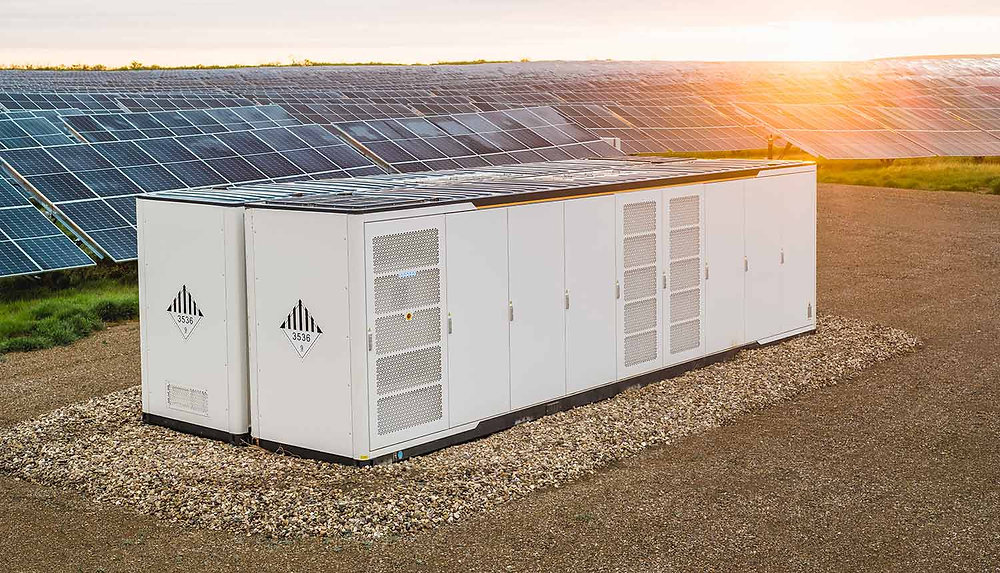
Commercial battery storage is increasingly common alongside solar installations, but the costs and the financial case for adding it are less well understood than solar alone. This post covers what commercial battery storage costs in the UK, the factors that drive the price, how payback works, and when adding storage is likely to strengthen the overall business case.
This is written for commercial and industrial businesses, not domestic customers. Battery storage at commercial scale behaves quite differently from home battery systems in terms of size, integration requirements, and the savings drivers.
What Is Commercial Battery Storage?
A commercial battery storage system stores electricity generated by an on-site solar array (or, in some configurations, electricity from the grid at off-peak rates) and discharges it when the site needs it. The goal is to increase the proportion of low-cost or self-generated electricity the site uses, reduce peak demand charges, and in some cases provide backup resilience.
At commercial scale, battery systems are typically lithium-ion and are measured in kilowatt-hours (kWh) for energy capacity and kilowatts (kW) for power output. Both matter. A system with a large energy capacity but low power output can store a lot, but cannot discharge it quickly. The right balance depends on the load profile of the site.
What Does Commercial Battery Storage Cost in the UK?
Commercial battery storage costs vary considerably depending on system size, the type and chemistry of the battery, integration requirements, and whether it is being installed alongside new solar or retrofitted to an existing array. Larger systems generally offer a lower cost per kWh of capacity.
Small commercial systems (up to 50 kWh)
Suited to smaller commercial premises where the goal is primarily to maximise self-consumption from an on-site solar array. These systems are often enough to shift daytime solar generation into the early evening and reduce the site’s reliance on grid imports during higher-tariff periods.
Mid-range systems (50 to 250 kWh)
The most common range for commercial premises with meaningful peak demand and a larger solar array. At this scale, storage begins to have a material impact on peak demand charges as well as self-consumption, particularly for sites on half-hourly metered tariffs or time-of-use pricing.
Large commercial and industrial systems (250 kWh and above)
At this scale, battery storage can actively manage peak demand, participate in demand-side response programmes, and provide meaningful business continuity in the event of a grid outage. Installation at this scale involves more complex integration with existing switchgear and grid metering, and DNO notification may be required.
Installed cost versus equipment cost
The cost of the battery units themselves is only part of the installed cost. Installation, commissioning, integration with the existing solar inverter and switchgear, any required electrical protection upgrades, and ongoing monitoring all contribute to the total project cost. When comparing quotes, confirm what each includes.
What Drives Commercial Battery Storage Cost?
System size in kWh and kW
Capacity (kWh) and power output (kW) both affect cost. A site that needs to store a large amount of solar generation over the course of a day requires more kWh capacity. A site that needs to flatten a sharp peak in consumption, for example a manufacturing process that creates a short intense demand spike, needs high kW output. In many commercial applications both matter, and the system is sized to meet both requirements.
Battery chemistry and supplier
Most commercial battery systems at this scale use lithium iron phosphate (LFP) chemistry, which has a better safety and cycle-life profile than some other lithium chemistries. The choice of supplier and battery manufacturer affects cost, warranty terms, and the track record of the product in commercial applications. Warranty periods and the number of warranted charge cycles vary between products and matter for long-term cost of ownership.
New installation versus retrofit
Installing battery storage alongside a new solar array is generally more cost-efficient than retrofitting storage to an existing system. When installed together, the inverter can often be specified to handle both solar and storage in a single unit, avoiding the cost of a separate battery inverter. If you are evaluating solar and storage together, the commercial solar panel costs guide covers the solar side in detail.
Grid connection and metering requirements
Battery systems that will participate in demand-side response or export to the grid have additional metering and protection requirements. For most commercial sites using storage primarily for self-consumption and peak shaving, the grid connection requirements are less onerous, but they still need to be factored into the total project cost.
How Does Payback Work on Commercial Battery Storage?
The financial case for battery storage at commercial scale rests on a combination of savings drivers. Which of these apply depends on the site’s tariff structure, load profile, and how the system is configured.
Increased solar self-consumption
For sites with an on-site solar array, battery storage allows solar generation that would otherwise be exported to the grid at a low Smart Export Guarantee rate to be stored and consumed by the site at a later time, displacing a grid import at the full tariff rate. The value of this depends on the gap between the site’s import tariff and the SEG export rate, and on how much surplus solar the site was previously exporting.
Peak demand reduction and avoidance of red-band charges
Half-hourly metered commercial sites pay demand charges based partly on their peak consumption. Sites on time-of-use distribution tariffs also pay higher rates during red-band periods, typically weekday late afternoons in winter. A battery system can be programmed to discharge during these periods, reducing peak demand and avoiding the highest-rate grid imports. For sites with significant peak demand charges, this can be one of the most valuable functions of storage.
Time-of-use arbitrage
Sites on flexible or dynamic tariffs can charge the battery at low-rate periods, typically overnight or at midday, and discharge it during peak-rate periods. The economics of this depend entirely on the spread between the rates available at different times of day on the site’s tariff.
Business continuity and resilience
For some commercial sites, the value of battery storage includes a resilience function: the ability to continue operating critical equipment during a grid outage. The financial value of this varies enormously by sector and is not always easily quantified, but for sites where a grid outage causes significant operational or reputational cost, it is a material consideration.
How payback is calculated
Payback on commercial battery storage depends heavily on the combination of savings drivers the site can access. A site with a high import tariff, significant peak demand charges, surplus solar generation, and time-of-use pricing will see a much stronger return than one where only one of these factors applies. A proper site-specific assessment is the only way to produce a reliable payback figure.
When Does Adding Battery Storage Strengthen the Solar Business Case?
Battery storage does not improve the economics of every solar installation. It makes the strongest case where one or more of the following apply. For a broader assessment of whether solar makes sense before adding storage, the commercial solar panels worth it guide covers that question in detail.
- The site exports a significant proportion of its solar generation, meaning the self-consumption rate is low without storage
- The site pays significant peak demand charges or is on a time-of-use tariff with a meaningful rate spread
- The site has evening or night-time demand that cannot be met by the solar array directly
- The site’s tariff includes a high proportion of grid charges that can be reduced by flattening demand
- Business continuity is a requirement and a grid outage would cause significant operational disruption
What Is Not Always in the Battery Storage Quote?
As with solar, battery storage quotes vary in what they include. Before comparing, confirm whether each includes:
- Battery management system and monitoring software
- Integration with the existing solar inverter or a new hybrid inverter
- Electrical protection and switchgear required for storage connection
- DNO notification if required
- Installation, commissioning and handover
- Warranty period and warranted cycle
- Ongoing monitoring and maintenance arrangements
Funding Routes for Commercial Battery Storage
As with commercial solar, the upfront capital cost is the most common reason businesses delay a project with a strong financial case. A solar PPA can cover solar and storage together with no upfront cost, though the total return over the contract term is lower than outright purchase. A fully funded arrangement pairing solar and voltage optimisation under a single funded structure is also available for qualifying sites.
How to Get an Accurate Cost for Your Site
The cost and savings figures for battery storage only become useful when they are applied to a specific site. The system needs to be sized to the site’s load profile, tariff structure, and the capacity of the solar array it will work alongside. A proper assessment starts with half-hourly consumption data, the site’s existing tariff, and the solar generation profile.
Powerdown220 offers a free site survey for UK commercial and industrial sites that covers solar, storage, or both. Use the free savings calculator for an initial estimate, then contact our team to arrange a full assessment.
Frequently Asked Questions
How much does commercial battery storage cost in the UK?
Commercial battery storage cost varies by system size, chemistry, whether it is being installed alongside new solar or retrofitted to an existing array, and the grid connection and integration requirements. A site-specific survey is the only way to get a reliable cost figure for a business case.
What is the payback on commercial battery storage?
Payback depends on how many savings drivers apply to the site: increased solar self-consumption, peak demand reduction, time-of-use arbitrage, and the value placed on resilience. Sites that can access several of these simultaneously see the strongest returns. A site-specific assessment produces a reliable payback projection.
Should I add battery storage to my commercial solar installation?
Storage strengthens the solar business case where the site exports a significant proportion of its solar generation, has high peak demand charges, is on a time-of-use tariff with a meaningful rate spread, or requires resilience. It adds less value where the site already has a high solar self-consumption rate and flat demand profile. A load profile analysis before installation will clarify which situation applies.
Can battery storage be added to an existing solar installation?
Yes, battery storage can be retrofitted to an existing solar array, though the cost and integration requirements depend on the inverter already in place. In some cases a new hybrid inverter is required alongside the battery. Installing solar and storage together as a new project is generally more cost-efficient.
What size battery do I need for my business?
Battery sizing for commercial applications depends on two things: how much energy you want to store (kWh capacity) and how quickly you need to discharge it (kW power output). The right size depends on your load profile, your solar array size, and your specific savings objective, whether that is self-consumption, peak demand reduction, time-of-use arbitrage, or resilience. A half-hourly consumption analysis is the starting point for proper sizing.
Does commercial battery storage qualify for capital allowances?
The capital allowances treatment for battery storage depends on the business’s tax position and the rules at the time of installation. Independent tax advice is recommended.
What warranties are available on commercial battery storage?
Battery warranty terms vary by manufacturer and cover both the period in years and the number of charge and discharge cycles. Both matter for long-term cost of ownership, as a battery that degrades faster will deliver fewer savings over its life.
To get a site-specific cost and savings projection for battery storage, contact our team to arrange a free site survey. Powerdown220 assesses your solar generation profile, load profile, tariff structure, and funding options before any commitment is made. Use the free savings calculator for an initial estimate.