Commercial Solar Panel Costs in the UK: What Businesses Actually Pay
If you are trying to understand commercial solar panel costs before speaking to a supplier, the honest answer is that the figure varies considerably, and most of the variation is explained by a small number of factors specific to your site. This post breaks down what drives the price of a commercial solar installation in the UK, what a realistic cost range looks like at different scales, and how payback works so you can judge whether the numbers make sense.
This is written for businesses evaluating a capital investment, not homeowners. Commercial solar operates at a different scale, with different grid connection requirements, structural considerations, and funding options.
What Determines Commercial Solar Panel Cost?
The cost of a commercial solar installation is not a fixed price per panel. It is a project cost that varies based on several site-specific factors.
System size in kilowatts peak (kWp)
The single biggest cost driver is the size of the system, measured in kilowatts peak (kWp). Larger systems cost more in absolute terms, but the cost per kWp typically falls as system size increases. A 50 kWp rooftop installation will have a higher cost per kWp than a 500 kWp installation, because fixed project costs such as scaffolding, electrical work, DNO applications, and project management are spread across more panels.
Roof type, condition and structure
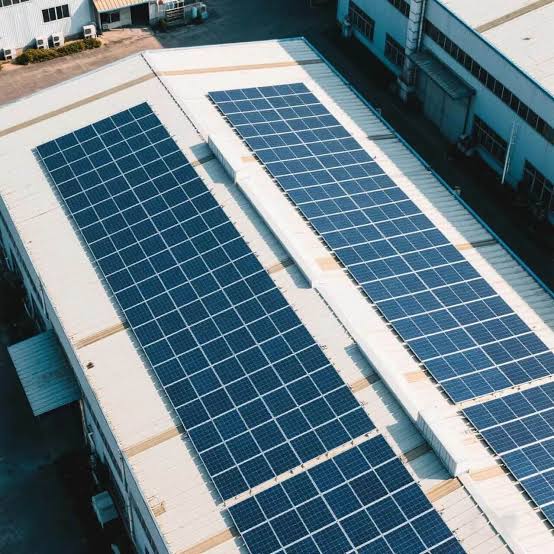
The roof that carries the panels directly affects installation cost. A flat commercial roof with no access issues and a good load-bearing capacity is the most straightforward installation. Pitched roofs, fragile or ageing roofing materials, asbestos cement sheets, limited load capacity, or restricted access all add cost. A structural survey is typically required before installation, and any remedial roof work required adds to the project total.
Grid connection and DNO requirements
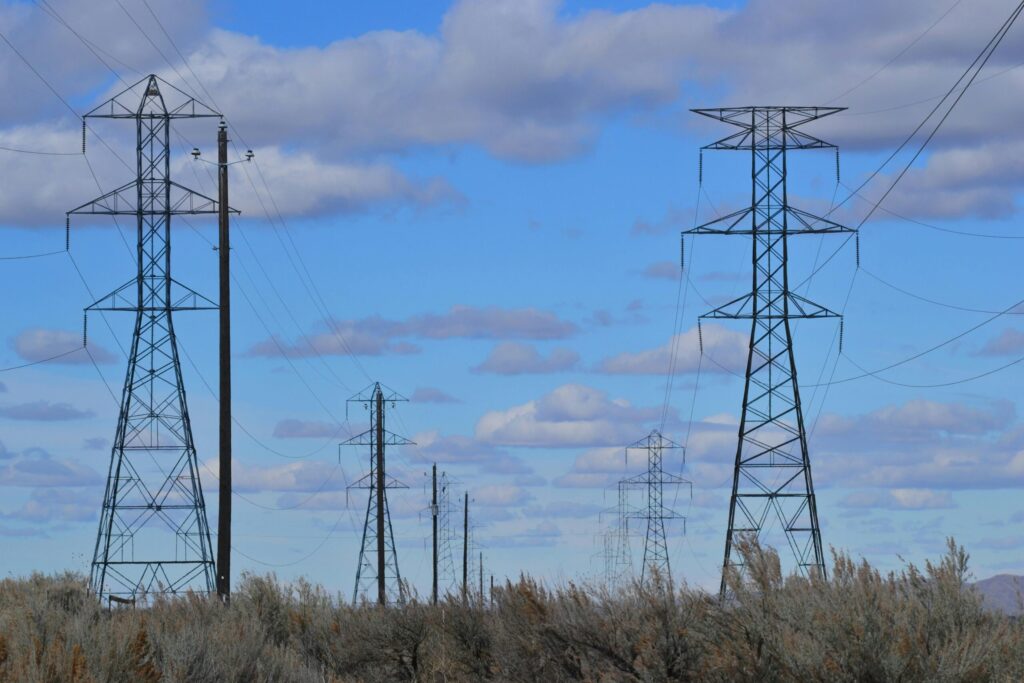
Larger commercial solar systems require a G99 application to the Distribution Network Operator (DNO) before connection. The DNO assesses the impact of the generation on the local network and sets the terms, including any export limit. For systems above a certain size, the DNO may require upgrades to the connection or switchgear as a condition of approval.
Inverter type and battery storage
A solar array without battery storage exports surplus generation to the grid under the Smart Export Guarantee at a rate typically well below the import tariff. Adding battery storage increases the capital cost but significantly improves self-consumption and can reduce peak demand charges. The cost of battery storage and how it affects overall payback is covered separately in the commercial battery storage costs guide.
Single or three-phase connection
Commercial and industrial sites operate on a three-phase supply, and solar systems at commercial scale are designed accordingly. The switchgear and protection equipment required for a three-phase commercial system adds to the cost compared to a single-phase domestic installation, and this is one reason commercial and domestic solar costs are not directly comparable.
What Does a Commercial Solar Installation Cost in the UK?
Supplier quotes vary, and prices change with panel and inverter costs, which have shifted considerably in recent years. The figures below are indicative ranges for UK commercial installations.
Small commercial systems (20 to 50 kWp)
Suited to smaller commercial premises, office buildings, or sites with limited roof space. A system in this range typically serves sites with annual electricity consumption under. The cost per kWp tends to be higher than larger systems because project overhead is spread across fewer panels.
Mid-range systems (50 to 250 kWp)
The most common range for commercial premises including retail, hospitality, and smaller industrial units. At this scale the cost per kWp begins to fall, and the payback case strengthens significantly for sites with a high proportion of daytime consumption. Many commercial sites in this range see strong returns without battery storage, particularly where the load profile aligns well with generation.
Large commercial and industrial systems (250 kWp and above)
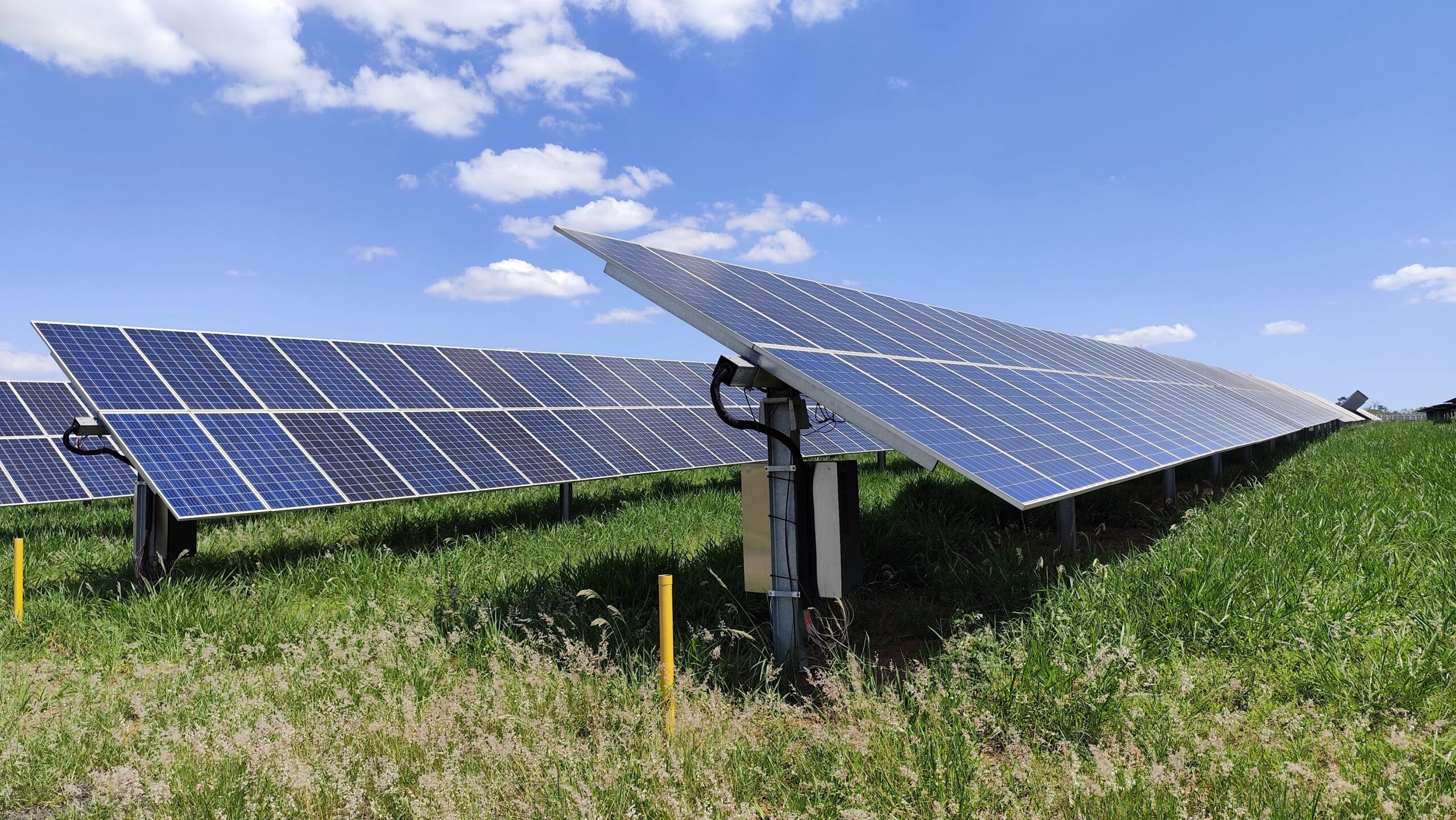
At this scale, ground-mount arrays, solar carports, and multi-section rooftop installations become relevant alongside large single-roof systems. DNO engagement is standard, G99 applications are required, and structural surveys of large industrial roofs are a prerequisite. The cost per kWp at this scale is typically the lowest, and for manufacturing or industrial sites with high daytime loads, the financial case is often the most compelling.
What Is Not Always in the Quote
Commercial solar quotes vary considerably in what they include. Before comparing quotes, confirm whether each one includes:
- Structural survey and any roof remediation required
- Scaffolding and access equipment
- DNO application fees and any required network upgrades
- Electrical protection and switchgear upgrades at the incomer
- Grid connection work
- Generation metering and monitoring equipment
- Project management and commissioning
- MCS or equivalent certification
A quote that appears significantly lower than others may be excluding some of these items. The total installed cost is what matters for payback calculations, not the panel and inverter price alone.
How Payback Works on a Commercial Solar Installation
Self-consumption rate
The payback on a commercial solar installation is driven primarily by how much of the generation the site consumes directly. Electricity consumed from the solar array displaces grid imports at the full import tariff rate. Electricity exported under the Smart Export Guarantee earns a much lower rate. A site that can consume 80% or more of what the array generates will see a much shorter payback than a site that exports most of its generation.
This is why load profile analysis before installation matters. The system should be sized to match the site’s consumption profile, not simply maximise the number of panels on the available roof area.
Grid tariff and time-of-use pricing
The value of self-consumed solar generation rises with the import tariff. Sites on higher unit rates, or on time-of-use tariffs where peak rates are significantly above average, see a stronger return from solar. Distribution red-band periods, typically weekday late afternoons in winter, carry the highest DUoS rates, and a battery system can shift consumption to avoid these, but even without storage a solar array that reduces daytime grid import produces meaningful savings.
Capital allowances
Commercial solar installations may qualify for capital allowances, which affect the net cost and therefore the payback period. The specific treatment depends on the business’s tax position and the applicable rules at the time of installation. Independent tax advice is recommended.
Typical payback ranges
Payback on commercial solar varies by site but is typically measured in years rather than decades for well-specified installations on sites with a good consumption profile. Sites with high electricity spend and strong self-consumption tend to see the strongest returns.
Funding Options That Change the Upfront Cost
The capital cost of a commercial solar installation is the most common reason businesses delay or decline a project with a strong financial case. Two funding routes remove or reduce the upfront requirement. A solar PPA allows installation with no capital outlay: the installer funds, owns and maintains the system, and the business pays a below-tariff rate for the electricity it generates. A fully funded combined project pairs solar with voltage optimisation under a single funded arrangement.
Both options produce a lower total return than outright purchase over the system’s life, because the funding cost is recovered from the savings. For businesses where capital is constrained or already committed, the funded route is typically the better outcome than deferring the project.
How to Get an Accurate Cost for Your Site
The only way to get a cost figure that is actually useful for a business case is a site-specific assessment. This covers the available roof area and its structural condition, the site’s half-hourly consumption data, the grid connection capacity, and any DNO constraints. From that data, a system can be properly sized and a realistic cost and savings projection produced.
Powerdown220 offers a free site survey for UK commercial and industrial sites. The survey produces a system design, cost estimate, savings projection, and payback calculation before any commitment is made. Use the free savings calculator for an initial ballpark based on your energy spend and sector, then contact our team to arrange a full assessment.
Frequently Asked Questions
How much does a commercial solar installation cost in the UK?
Commercial solar installation cost varies by system size, roof type, grid connection requirements, and location. Larger systems typically have a lower cost per kWp than smaller ones because project overheads are spread across more panels. A site-specific survey is the only way to get a reliable figure for a business case.
What affects commercial solar panel cost the most?
System size in kWp is the largest single cost driver. Roof type and condition, grid connection requirements, DNO application and any required network upgrades, and the inclusion of battery storage all affect the total installed cost significantly. What is and is not included in a supplier quote also varies, so comparison requires checking what each quote covers.
How long is payback on a commercial solar installation?
Payback depends on system size, the site’s electricity tariff, how much of the solar generation the site consumes directly, and whether battery storage is included. Sites with high electricity spend and a good self-consumption profile tend to see the strongest returns. A site-specific assessment produces a reliable payback projection.
Can I get commercial solar with no upfront cost?
Yes. A solar PPA allows a commercial solar installation with no capital outlay. The installer funds, owns and maintains the system, and the business pays a below-tariff rate for the electricity it generates. A fully funded arrangement is also available pairing solar with voltage optimisation.
Does adding battery storage increase commercial solar costs significantly?
Yes, battery storage adds to the upfront cost of a commercial solar installation. It also increases self-consumption, reduces peak demand charges, and improves overall payback in many cases, particularly for sites with significant evening or variable demand. The commercial battery storage costs guide covers the cost and payback of storage in detail.
What is the Smart Export Guarantee and how does it affect payback?
The Smart Export Guarantee (SEG) requires licensed electricity suppliers to offer a payment for surplus solar generation exported to the grid. SEG rates are set by each supplier and are generally significantly below the import unit rate. The lower the proportion of generation that is exported rather than self-consumed, the stronger the payback on the solar installation.
To get an accurate cost and savings projection for your site, contact our team to arrange a free site survey. Powerdown220 assesses roof suitability, grid connection, consumption profile and funding options before any commitment is made. Use the free savings calculator for an initial estimate.