What Is a Battery Energy Storage System (BESS)? A Guide for Businesses
What a battery energy storage system is, how a BESS works, what businesses use one for, and how to size it.
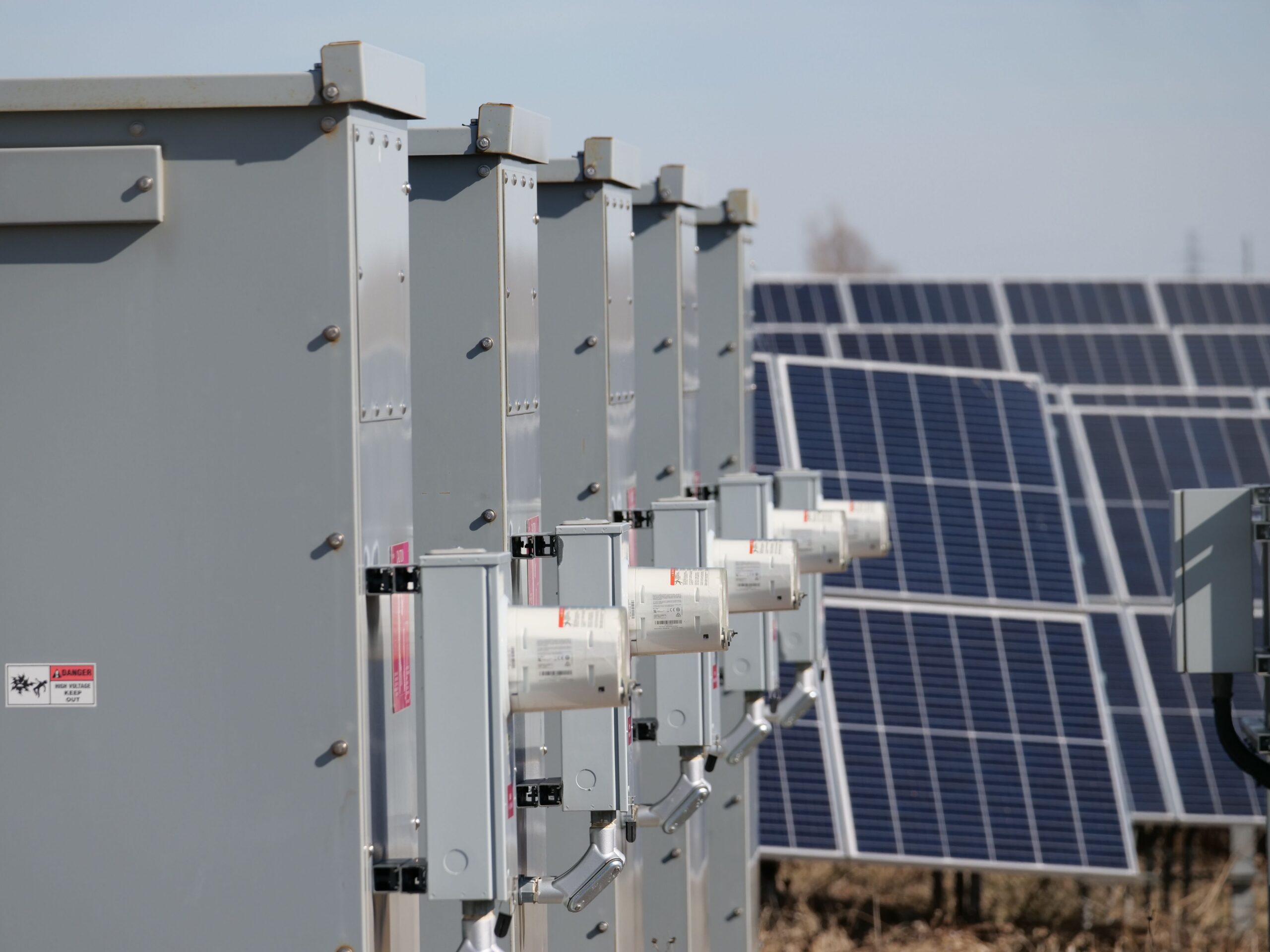
A battery energy storage system, usually shortened to BESS, lets a business store electricity and use it later. It is the technology behind commercial battery storage, and it is becoming a standard part of sites that generate their own solar power or want more control over when they buy electricity from the grid.
This guide explains what a BESS is, how it works, what businesses use one for, and what to think about before installing one. It is written for commercial and industrial sites, not homeowners.
What Is a Battery Energy Storage System?
A battery energy storage system is a battery, an inverter and control software working as one unit. It charges when electricity is plentiful or cheap, for example from your solar panels at midday or from the grid overnight, and discharges when that electricity is worth the most to your site.
The word “system” matters. A BESS is not just a large battery. The software that decides when to charge and discharge is what turns stored electricity into savings.
The Main Parts of a BESS
- Battery modules: the cells that store energy, grouped into racks or cabinets.
- Power conversion system (PCS) or inverter: converts between the direct current (DC) the battery stores and the alternating current (AC) your site uses.
- Battery management system (BMS): monitors each cell’s voltage, temperature and state of charge, and protects the battery from damage.
- Energy management system (EMS): the control software that decides when to charge, discharge or hold charge, based on your tariff, your load and your solar generation.
- Enclosure, cooling and fire protection: keeps the battery at the right temperature and safely contained, indoors or outdoors.
How a BESS Works
A BESS runs a simple cycle, many times over its life:
- Charge: when solar generation exceeds what the site is using, or when grid electricity is cheapest, the system stores energy.
- Hold: the energy management system holds the charge until it is most valuable.
- Discharge: during peak-rate periods, when solar output drops, or when demand spikes, the battery supplies the site, reducing what it draws from the grid.
All of this happens automatically. Your site sees a steady supply; the system decides, minute by minute, where that supply comes from.
What Businesses Use a BESS For
Using more of your own solar power
Without storage, surplus solar generation is exported to the grid, usually at a low export rate. A BESS stores that surplus and uses it on site later, which is almost always worth more. Read more about commercial solar battery storage.
Cutting peak demand charges
Sites on half-hourly metered tariffs often pay more for electricity at peak times, and some pay capacity or demand-related charges. A BESS discharges during those periods to reduce the peaks the grid sees.
Time-of-use arbitrage
On time-of-use tariffs, a BESS can charge when electricity is cheap and discharge when it is expensive, lowering the average price your site pays per kWh.
Backup and resilience
With the right configuration, a BESS can keep critical loads running during a grid outage, such as refrigeration, IT, or safety systems.
Grid flexibility services
Larger systems can earn income by responding to signals from the grid, reducing demand or exporting at times of stress. Whether this is worthwhile depends on the size of the system and how it is contracted.
Behind-the-Meter vs Grid-Scale BESS
Most news coverage of battery energy storage systems is about grid-scale sites: large battery farms connected directly to the grid, trading electricity and balancing the network.
A commercial BESS is usually behind the meter. It sits on your side of the electricity meter and its main job is to reduce your site’s energy costs and increase its resilience. The technology is similar; the purpose and the business case are different.
Battery Chemistry: LFP and NMC
Most stationary battery storage today uses lithium-ion cells, in one of two main chemistries:
- Lithium iron phosphate (LFP): the most common choice for commercial storage. It is thermally stable, handles many charge cycles, and does not use cobalt.
- Nickel manganese cobalt (NMC): stores more energy for its size and weight, which matters more in vehicles than in a battery that sits in one place.
For a commercial site, cycle life, safety and warranty terms usually matter more than energy density, which is why LFP has become the default.
Sizing a BESS: kWh and kW
Two numbers describe a battery energy storage system:
- Capacity (kWh): how much energy it can store. This decides how long it can supply your site.
- Power (kW): how fast it can charge or discharge. This decides how big a peak it can cover.
A site that wants to shift a large amount of midday solar into the evening needs plenty of kWh. A site that wants to shave short, sharp demand peaks needs more kW. Good sizing starts with your half-hourly consumption data and, if you have it, your solar generation profile, not a standard product size.
Safety and Regulation
A commercial BESS has to be designed and installed with safety in mind. That includes the location of the system, ventilation and cooling, fire detection and suppression where needed, separation from escape routes, and the battery management system’s protection functions. Your insurer may also have requirements.
If the system can export to the grid, or operate in parallel with it, your Distribution Network Operator (DNO) will need to approve the connection, usually through the G99 process.
How Long Does a BESS Last?
A battery’s life is measured in charge cycles as well as years. Capacity reduces gradually over time, and warranties usually guarantee a minimum level of remaining capacity after a set number of years or cycles. LFP batteries are rated for thousands of cycles, and many commercial systems are expected to last 10 to 15 years or more, depending on how hard they are used. The inverter may need replacing during that time.
When comparing systems, look at the warranted capacity at the end of the warranty period, not just the headline length of the warranty.
BESS vs a Home Solar Battery
A home battery is usually 5 to 15 kWh and mostly shifts solar power into the evening. A commercial BESS typically starts around 50 kWh, connects to a three-phase supply and existing switchgear, and is controlled by an energy management system that responds to your tariff and load. It can cut peak charges and provide backup, which a domestic battery is not designed to do at commercial scale.
Is a BESS Right for Your Site?
A battery energy storage system tends to make the strongest case where:
- you have, or are planning, a solar installation that exports a meaningful share of its generation
- your site is on a half-hourly or time-of-use tariff with significant peak-rate costs
- short power interruptions are costly for your operations
- you have space for the system in a safe, accessible location
For an idea of costs and payback, read our guides to commercial battery storage costs in the UK and whether battery storage is worth it for business. To see what your site could save, try our savings calculator.
Want to know if a BESS makes sense for your site? Book a consultation and talk it through with our team.
Frequently Asked Questions
What does BESS stand for?
BESS stands for battery energy storage system: a battery, inverter and control software that store electricity and release it when it is needed.
How does a battery energy storage system save money?
By using more of your own solar power instead of exporting it, by reducing the electricity your site draws at peak-rate times, and by charging when electricity is cheap and discharging when it is expensive.
Do I need solar panels to have a BESS?
No. A BESS can charge from the grid during cheaper periods. But most commercial systems are paired with solar, because storing your own generation is usually where the strongest savings are.
Can a BESS provide backup power?
Yes, if it is designed and configured to. Backup capability needs to be specified at the design stage, along with which loads it should support.
What size BESS does my business need?
It depends on what you want the system to do and how your site uses power. Sizing should be based on your half-hourly consumption data and solar generation, not a standard product size.
Is battery energy storage safe?
Modern commercial systems include a battery management system, cooling and protection functions, and are installed to fire safety and electrical standards. LFP chemistry, the most common for commercial storage, is also one of the most thermally stable.